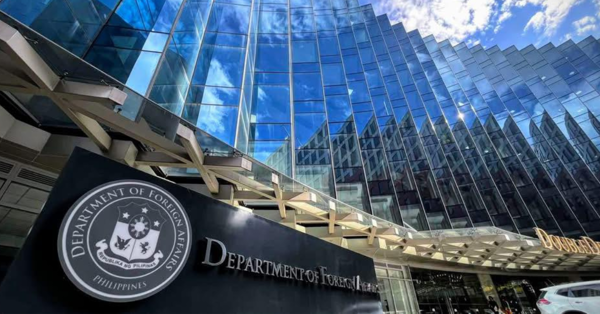
The Iranian diplomatic mission in Bangkok reported on X: "We value our friendship and will not forget our friends." Iran announced that it is allowing the passage of ships from friendly countries, but warned that it is preparing to completely close the Strait of Hormuz, attacking energy and technology infrastructure, as well as desalination plants in the region. President of the Philippines, Ferdinand Marcos Jr., declared a national state of emergency in energy on Tuesday amid a supply shortage resulting from the war against Iran, which is particularly affecting Asian nations dependent on shipments from the Strait of Hormuz. Marcos Jr. signed an executive order citing the "imminent danger hanging over the availability and stability of the country's energy supply," under which a committee is formed to take protective measures. "The Secretary of Energy has determined that the circumstances mentioned pose an imminent danger of a critically low level of energy supply and that urgent measures are necessary to ensure the stability and sufficiency of the country's supply," the order states. The declaration of a national energy emergency "will allow the Government to apply coordinated and adapted measures to address the risks derived from disruptions in the global energy supply," it adds. Philippines takes measures amid possible crisis over closure of the Strait of Hormuz. The order does not specify whether the Government will impose a price cap on petroleum products, but, under the law, the President of the Philippines can bypass several procedures to control prices or speed up the acquisition of certain raw materials in these circumstances. Over the weekend, the Philippines had already temporarily and partially authorized the use in transport and industry of Euro II standard petroleum products, which are more polluting, as a contingency measure amid the energy supply crisis. U.S. President Donald Trump ordered to delay for five days attacks on Iranian energy infrastructure, after having given Iran a 48-hour ultimatum to carry out this type of offensive if it did not reopen the Strait of Hormuz, key to world energy trade. The blockage of the Strait of Hormuz, through which 20 percent of the world's oil and liquefied natural gas circulates in times of peace, by Tehran, which controls its northern shore, is one of the focal points of tension in the U.S. and Israel's war against Iran. The price of a barrel of Brent oil for delivery in May again exceeded $100 this Tuesday. Iran allows the passage of a Thai ship through the Strait of Hormuz. A Thai-flagged ship crossed the Strait of Hormuz—affected by the war of the United States and Israel against Iran—this Tuesday after "close coordination" with the authorities of the Persian country and Oman, reported the Iranian embassy in Thailand on Tuesday. "We inform the Thai people that, thanks to the close collaboration between our country and the Sultanate of Oman, a Thai ship has crossed the Strait of Hormuz without incident," the Iranian embassy reported.

Philippines Declares Energy Emergency Amid Crisis
President of the Philippines Ferdinand Marcos Jr. declared a national energy emergency due to a supply shortage caused by the war with Iran. Iran, in turn, threatens to completely close the Strait of Hormuz, leading to a rise in oil prices. The U.S. has postponed attacks on Iranian infrastructure.